

Our work
Real job sites, photographed on location. The settings are described; the clients are not named.
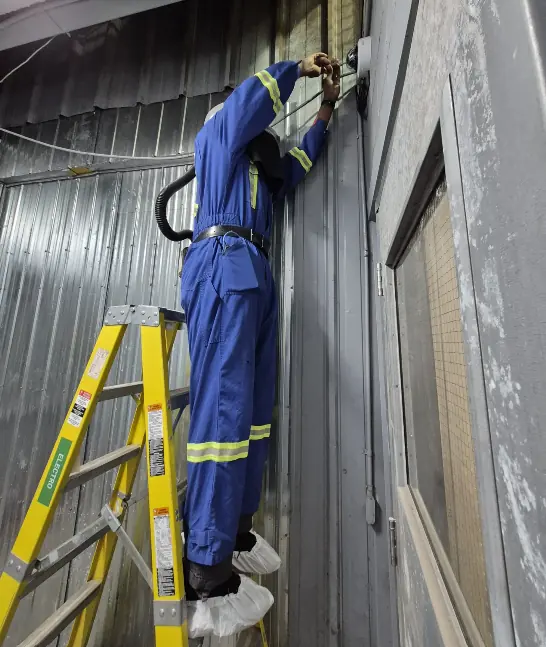 Industrial siteIP video surveillance on an industrial site
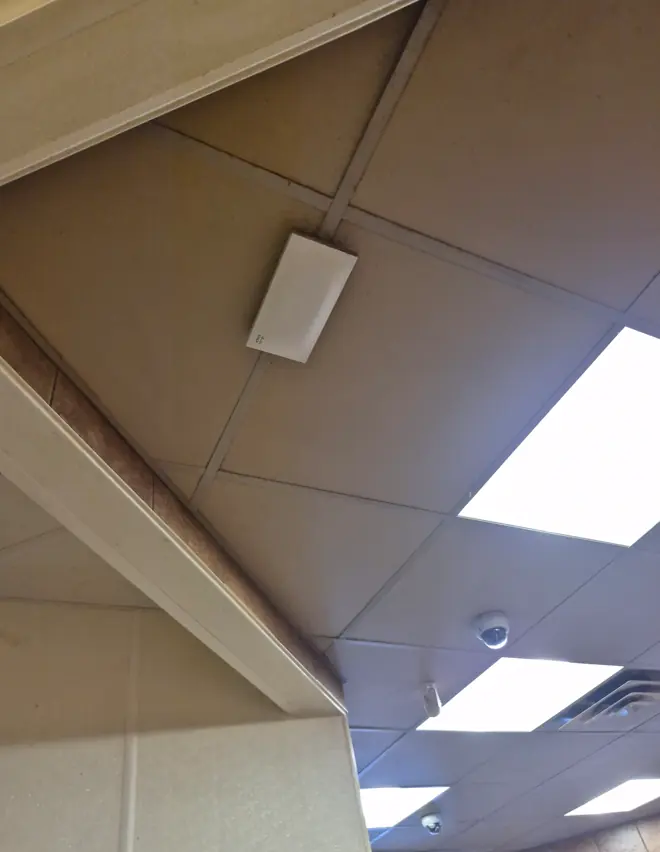 Quick-service restaurantNetwork and wireless coverage — food service
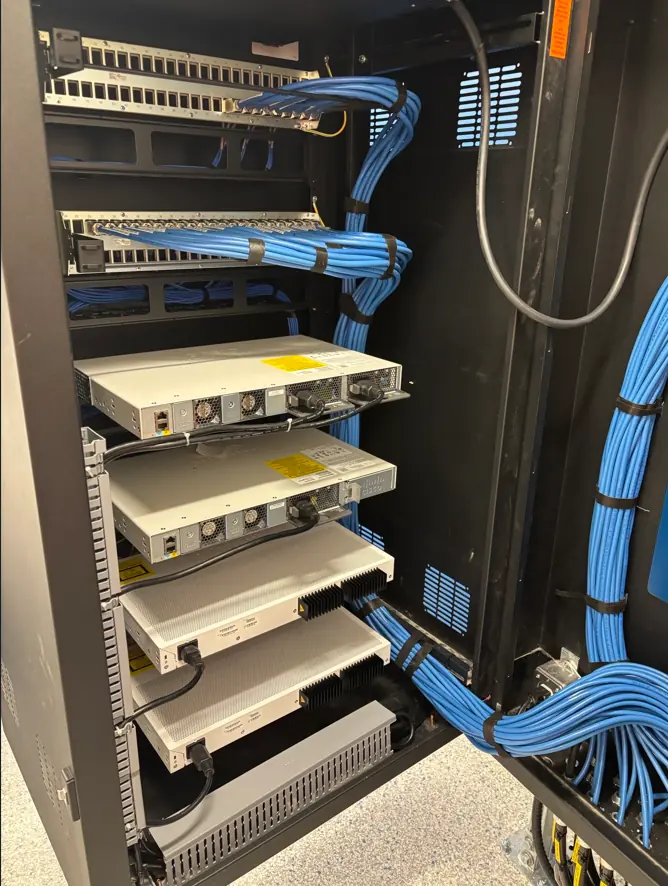 Commercial buildingStructured cabling, patching and testing — commercial building
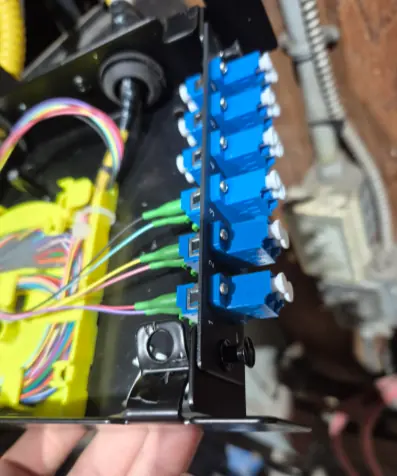 Building-to-building linkFibre optics: splicing and termination
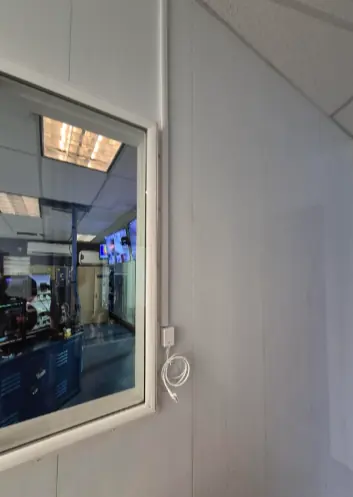 Working officesSurface-run cabling in an occupied building
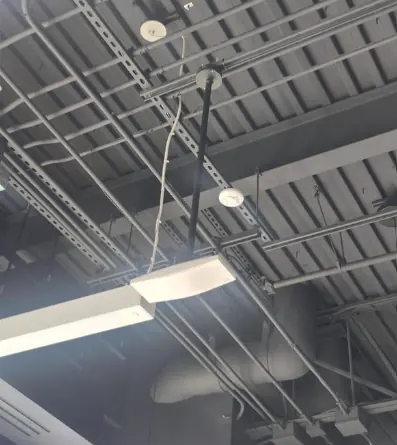 Transport companyWireless coverage for a warehouse
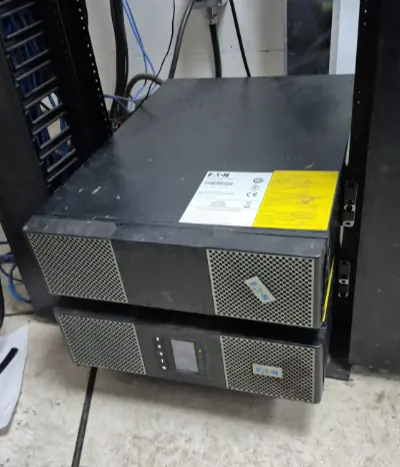 Telecom roomService continuity: UPS units and a backup link
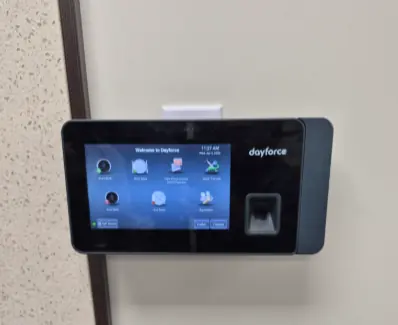 WorkplaceCabling and installation of time clocks
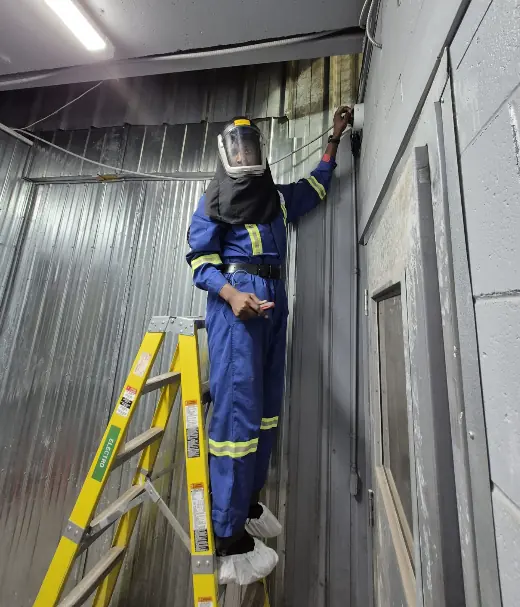
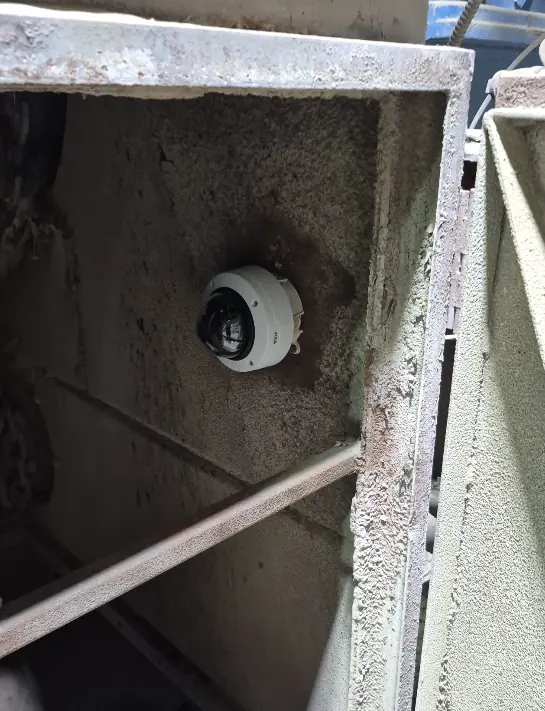
IP video surveillance on an industrial site
Industrial site
Axis cameras installed on an industrial building. The work is done at height, on metal cladding, with surface-run cable fixed along the structure — that is what a building of this type allows.
The protective equipment worn in these photographs is not an accessory: a hooded face shield and full coveralls are what this building’s atmosphere requires.
The environment decides the hardware as much as the surveillance need does. The dome camera on this site sits in an enclosure where dust is permanent: the housing has to stay sealed.
Network and wireless coverage — food service
Quick-service restaurant
Wireless access point mounted in the suspended ceiling of the dining area, and a telecom cabinet installed at the back of the premises.
A restaurant runs its tills, order screens, payment terminals and guest Wi-Fi over the same network. Separating those uses happens in the cabinet, not at the ceiling: switches, labelled patching, traceable pathways. The access point is only the visible part.
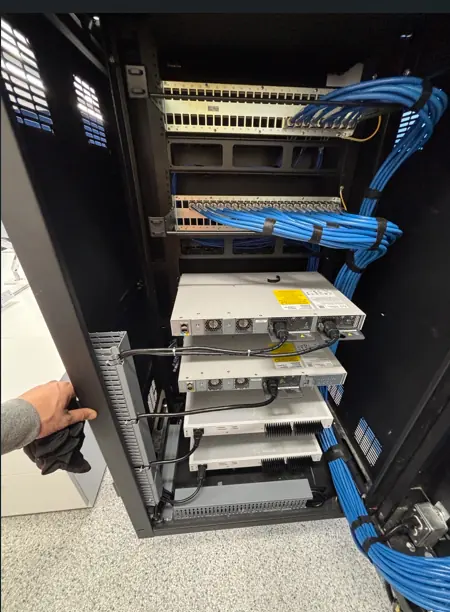
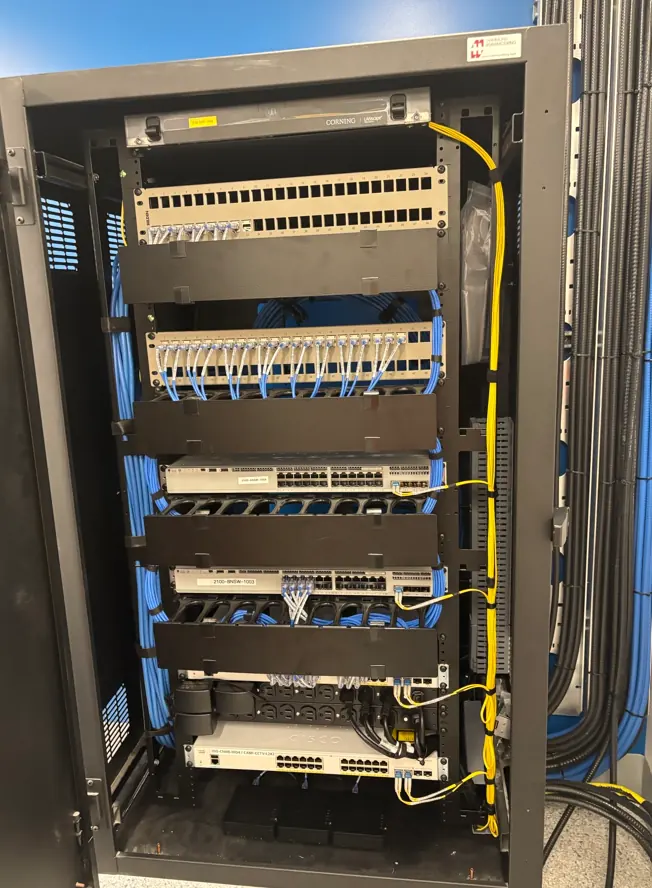
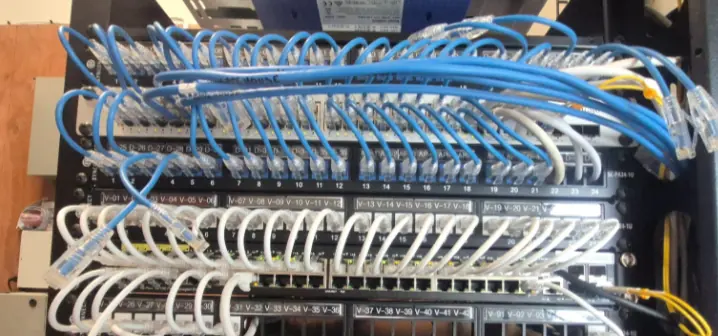
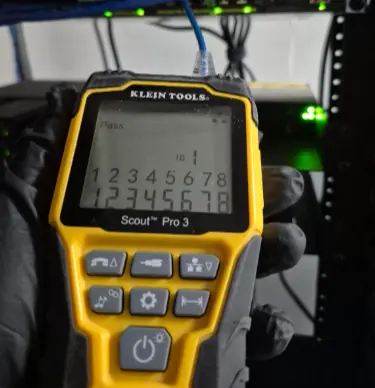
Structured cabling, patching and testing — commercial building
Commercial building
Copper and fibre running up into a telecom cabinet: optical tray at the top, patch panels, switches, and cable bundles combed and tied along the uprights.
The order visible in these photographs is not vanity. A cabinet where every link is labelled and every bundle held is troubleshot in minutes; a disorderly one takes hours, often by someone who was not there at installation.
Fibre optics: splicing and termination
Building-to-building link
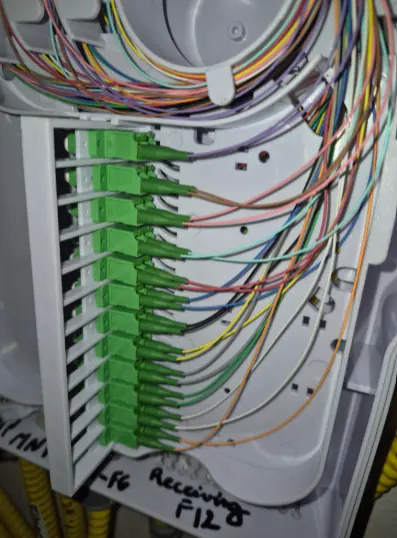
Fibre termination in a wall enclosure: splices seated in the tray, pigtails coiled to the specified bend radius, and green connectors mated to the panel adapters.
The green of those connectors is not decorative: it marks an angled polish, which sends reflected light out of the fibre core instead of back toward the transmitter. Mixing them with flat-polish connectors degrades the link without ever cleanly breaking it — the kind of fault people chase for weeks.
The rest is discipline: a respected bend radius, enough slack to redo a splice later, and identification written on site. A pinched fibre cannot be seen; it has to be measured.
Surface-run cabling in an occupied building
Working offices
Surface-mounted network outlet fed by a raceway running up the partition to the ceiling.
In an occupied building you do not reopen finished walls for one outlet. Surface raceway goes in without dust or interruption, it moves when partitions move, and it leaves the pathway visible — therefore inspectable. It is less pretty than concealed cable, and it is what suits the building.
Wireless coverage for a warehouse
Transport company
Access point suspended beneath a warehouse roof structure, fed by a cable tray running along the steelwork.
A warehouse is not an office: ceiling heights, steel racking and dock doors opening and closing change propagation from one moment to the next. Coverage is verified once the building is in use and loaded, not from a survey taken empty.
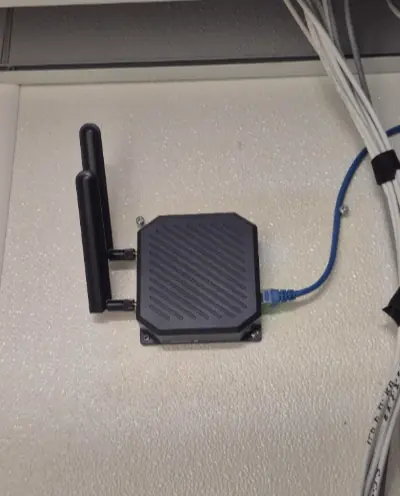
Service continuity: UPS units and a backup link
Telecom room
Supply and installation of rack-mounted Eaton UPS units below the active equipment they protect; and installation of a cellular router providing backup internet access when the primary link goes down.
The UPS sitting at the bottom of the rack is not incidental: it is the heaviest item.
Cabling and installation of time clocks
Workplace
Wall-mounted time clock connected to the network: cable pulled to the mounting point, housing fixed, commissioned and verified.
The terminal belongs to the workforce-management software vendor; the link connecting it to the network, its power and its location are infrastructure. When the two are not coordinated, the device arrives before the outlet does.
These pages show what the rest of the site describes. Every photograph comes from a project carried out by our crews; none of them is purchased stock imagery.
The organisations involved are not named. On a security assignment, stating publicly where you installed what is information a client should not see circulating — and it is the kind of discretion they are entitled to expect from their supplier.
Frequently asked questions
Why are the clients not named?
Because we do not have their written consent to name them, and because a security assignment is poorly told in public: saying where you installed what informs a curious party as much as a prospect. We describe the setting, which is what actually interests someone comparing suppliers. A named reference can be provided on request, with the consent of the client concerned.
Are these really your own job sites?
Yes. Every photograph was taken by our crews on location. No stock imagery is used anywhere on this site.
Do you work in occupied buildings?
Yes — that is the case for most of these projects. It means working around schedules, occupants and sensitive areas; those constraints are identified at the site survey and built into the quote.
Do you work outside the Montreal area?
Laval and Greater Montreal are our everyday. We work elsewhere in Quebec and in Ontario on planned assignments — the company holds registered addresses in six Quebec regions, from the Laurentides to the Côte-Nord.
A similar project?
Tell us about the building and what you want to do in it. An advisor gets back to you within one business day; if the site needs to be seen, we book a visit.